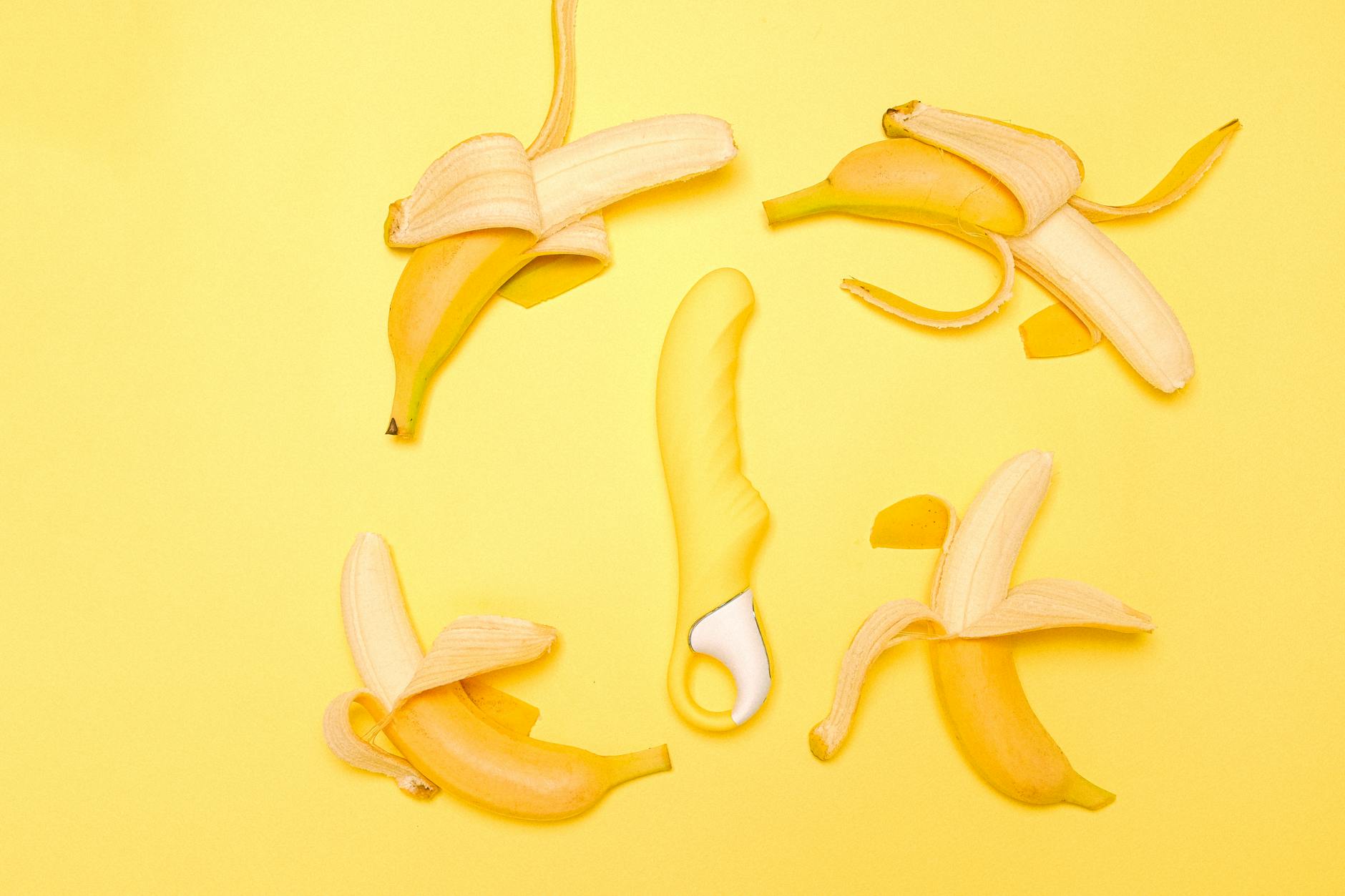
Why Lemon Vibrators Work Better When You Have a Low Pain Threshold
If direct clitoral stimulation has always felt too sharp, too raw, or just plain uncomfortable, you're not alone. And here's the thing: it doesn't mean you can't orgasm. It means you need a different approach. That's where lemon vibrators, which use clitoral suction instead of direct vibration, become genuinely life-changing.
Let me explain what's happening in your body, why traditional vibrators feel worse, and exactly how clitoral suction works differently.
The physiology of a sensitive clitoris
Your clitoris has roughly 8,000 nerve endings packed into a space the size of a pea. For some people, that density is absolutely blissful. For others, it reads as pain or discomfort when stimulated directly. This isn't weakness or dysfunction. It's just how your nervous system is wired.
When you have a low pain threshold for direct touch, three things are usually happening at the cellular level. First, your nerve endings may be more densely clustered or more reactive to pressure. Second, your pelvic floor muscles might be chronically tense, which amplifies sensation into discomfort. Third, your brain may interpret vibration as threat rather than pleasure because of past pain, anxiety, or trauma.
None of these mean you're broken. They mean you need a tool designed for sensitive tissue.
How direct vibration feels different
Traditional vibrators press directly against the clitoris and surrounding tissue. This creates sustained, repeated friction. For most people, that's the whole point. But if you have a low pain threshold, that friction can feel like a dentist's drill. Sharp. Relentless. Almost electric.
The sensation builds quickly, which is fine if your nervous system welcomes it. But if you're sensitive, that rapid escalation can trigger the body to tense up and shut down. Your pelvic floor clenches. Blood flow decreases. The pleasure pathway closes.
This isn't uncommon. I work with many clients who've spent years thinking they simply couldn't enjoy vibrators, when really they just needed a different mechanism.
Why clitoral suction changes everything
Here's where lemon vibrators like the Lem work differently. Instead of vibrating against the clitoris, suction gently pulls the tissue upward and stimulates the entire glans and hood through air pulse technology. It's indirect. It's diffuse. It's gentler.
Think of the difference between someone poking your arm repeatedly versus someone gently drawing their palm across your skin. Both are touch. One feels sharp. The other feels warm and enveloping.
With clitoral suction, your nerves aren't being hammered with direct pressure. Instead, they're being activated through gentle negative pressure and rhythmic waves. The sensation spreads across the tissue rather than concentrating all the intensity on one small point.
For people with a low pain threshold, this means arousal can build slowly, steadily, without triggering your nervous system's alarm bells. Your pelvic floor stays relaxed. Blood flow increases. Your brain stays in pleasure mode instead of flipping into protection mode.
The intensity control advantage
Most lemon clitoral vibrators have multiple intensity levels. This matters enormously when you're sensitive. You don't have to jump from zero to ten. You can start at level one or two and spend fifteen minutes there, letting your body acclimate to the sensation.
With traditional vibrators, stepping down the intensity often just makes the buzzing feel annoying instead of intense. It's like turning down the volume on a song you hate. You don't like it more. You just like it slightly less.
Clitoral suction vibrators feel fundamentally different at low intensities. Level one still feels like pleasure. It just feels quieter. Gentler. More like a slow conversation than a shout.
Many of my clients with low pain thresholds stay on levels one through three indefinitely. Some graduate to four or five. Others never need to. The point is that you're not chasing intensity. You're chasing the sensation that works for your body.
Pattern versus power
Another crucial difference: many clitoral suction devices offer varied patterns and pulse rhythms instead of just ramped-up vibration. So instead of "stronger vibration," you get "steady pulse," "wave," "fluttering," "building," and others.
If one pattern feels sharp or overwhelming, you can switch to another one that feels warm or rounded. This flexibility is gold for sensitive bodies. It means you're not stuck with one unpleasant sensation ramped to different volumes.
When I recommend the Lem to clients with low pain thresholds, they often discover that patterns three, four, and seven feel perfect while one and two feel too intense. Everyone's threshold is different. The tech just gives you room to explore without being locked into vibration as your only option.
Building tolerance without forcing it
Here's a misconception: if you're sensitive, you should just push through and build tolerance. That's sometimes true for other physical challenges. It's almost never true for pleasure. Forcing yourself through discomfort in pursuit of orgasm teaches your body that sex is uncomfortable. That's the opposite of what you want.
Instead, use a lemon vibrator exactly as it is. Start at the lowest intensity. Use it for five or ten minutes, a few times a week. Notice what patterns feel good. Let your nervous system gradually learn that this sensation is safe. Over weeks or months, your comfort zone naturally expands. Not because you're forcing it, but because your body is learning pleasure.
Many clients report that they eventually want slightly more intensity because their baseline of comfort shifted. That's authentic tolerance building. It's different from white-knuckling through pain.
Positioning matters too
With traditional vibrators, the position and angle of contact matters hugely. Slightly too far down and it's uncomfortable. Slightly to the side and the friction catches wrong. For sensitive people, this trial and error is exhausting.
Clitoral suction vibrators are more forgiving because the suction creates a stable seal regardless of tiny angle shifts. The intensity and sensation stay consistent even if you shift position slightly. This is deeply helpful when you're sensitive. You're not constantly micro-adjusting to find the one tolerable position.
When to layer lube or barrier methods
Some people with low pain thresholds find that a thin layer of lubricant between the device and skin helps. Some find that using a thin silicone barrier (like a small piece of medical-grade silicone) softens the sensation further. This isn't cheating. It's customization.
If you want to try this, start with a tiny amount of water-based lube. See if it changes the sensation in a good way. If it does, there's your answer. If it doesn't, you've lost nothing. A barrier method works similarly. Experiment without pressure.
The emotional piece
Here's what I see most often: people with low pain thresholds often carry shame about their sensitivity. They think something is wrong with them. They compare their experience to partners or friends who seem to climax easily with any vibrator.
That comparison is useless. Your nervous system is not a ranking system. Sensitive is not worse than robust. It's just different. And different bodies need different tools.
The moment you stop fighting your sensitivity and instead choose a tool designed for it, something shifts. You're not broken and tolerating discomfort. You're honoring how your body actually works.
When to see a specialist
If direct clitoral touch has always felt painful or if you have a history of vulvodynia, pelvic pain, or trauma, it's worth checking in with a pelvic floor physical therapist or trauma-informed gynecologist. Sometimes low pain thresholds have a treatable component. Sometimes they don't. Either way, professional perspective helps.
But you don't need permission to use a lemon vibrator. You don't need to fix yourself first. If clitoral suction sounds like it might work better for your body, that's your answer.
FAQ: Low Pain Threshold and Clitoral Stimulation
Can lemon vibrators cause damage if I have a low pain threshold?
No. Clitoral suction is gentler than direct vibration precisely because it doesn't apply sustained mechanical pressure to sensitive tissue. As long as you're using a reputable device like the Lem and following basic care instructions, you're fine. Your low pain threshold is a signal that this device suits you, not a reason to avoid it.
Will I eventually be able to use traditional vibrators if I start with clitoral suction?
Maybe. Some people find that after months of positive pleasure experiences with suction, their nervous system relaxes enough to enjoy direct vibration too. Others discover they prefer suction and never want anything else. Both outcomes are perfectly fine. The goal is pleasure, not diversity of tools.
What intensity should I start at if I have a low pain threshold?
Level one or two. Spend at least five sessions there before considering increasing. Many people never go higher, and that's completely normal. You're not aiming for the highest intensity any vibrator can produce. You're aiming for the sensation that feels good in your body.
Is it normal for suction to feel less intense than I expected?
Yes. Clitoral suction is fundamentally different from vibration. It often feels less "pushy" and more diffuse. Some people find this disappointing at first because it doesn't match the intensity they expected. Give it three or four sessions before deciding. As your nervous system relaxes, the sensation often deepens.
Can I use lemon clitoral vibrators during menstruation?
Absolutely. Some people find that clitoral suction feels even better during their cycle because the tissue is naturally more engorged and responsive. Others prefer to skip it during their period. Listen to your body. There's no rule here.
What's the difference between lemon vibrators and other clitoral suction devices?
The Lem and similar lemon-shaped devices are designed with a specific cup size and suction profile. Some suction vibrators are larger, some offer different pulse patterns, some have different intensity ranges. The physics of the suction itself is similar across brands. What differs is ergonomics, motor power, noise level, and material. For people with low pain thresholds, the key is finding a device you can hold comfortably and use without strain, since tension in your hands and forearms actually travels up to your pelvic floor and can make you tense up.
You deserve pleasure that doesn't require white-knuckling through pain
A low pain threshold isn't a life sentence of discomfort during sex. It's information about how your nervous system works. And now you know a tool that's actually designed for that nervous system.
Start slow. Be patient with yourself. Let your body learn that pleasure is safe. That's where the real shift happens.
If you have more questions about what might work for your body, reach out. That's what I'm here for.