Your cycle is doing more than you think
Honestly, most of us learn that our menstrual cycle affects mood, bloating, and energy. Nobody really talks about how it transforms the entire pleasure experience. Your clitoris actually swells and shrinks across your cycle. Sensitivity shifts. Arousal speed changes. The kind of stimulation that feels amazing on day 5 might feel too intense on day 14.
This isn't a problem to fix. It's information you can use.
I work with people who spend weeks feeling frustrated with their bodies because they're trying to have the same experience every single day. Then they realize their cycle is the variable they've been missing. Once you understand what's happening physiologically, you can work with your body instead of against it.
What estrogen and testosterone actually do
Your cycle isn't just one hormone. It's a coordinated dance between estrogen, progesterone, luteinizing hormone (LH), and testosterone. Each one influences blood flow, nerve sensitivity, and how your brain processes pleasure signals.
Estrogen peaks twice: a small surge before ovulation and another rise during the luteal phase. When estrogen is high, blood flow increases to the genitals. The clitoris becomes more engorged. Your tissues are plumper, more sensitive. Arousal builds faster.
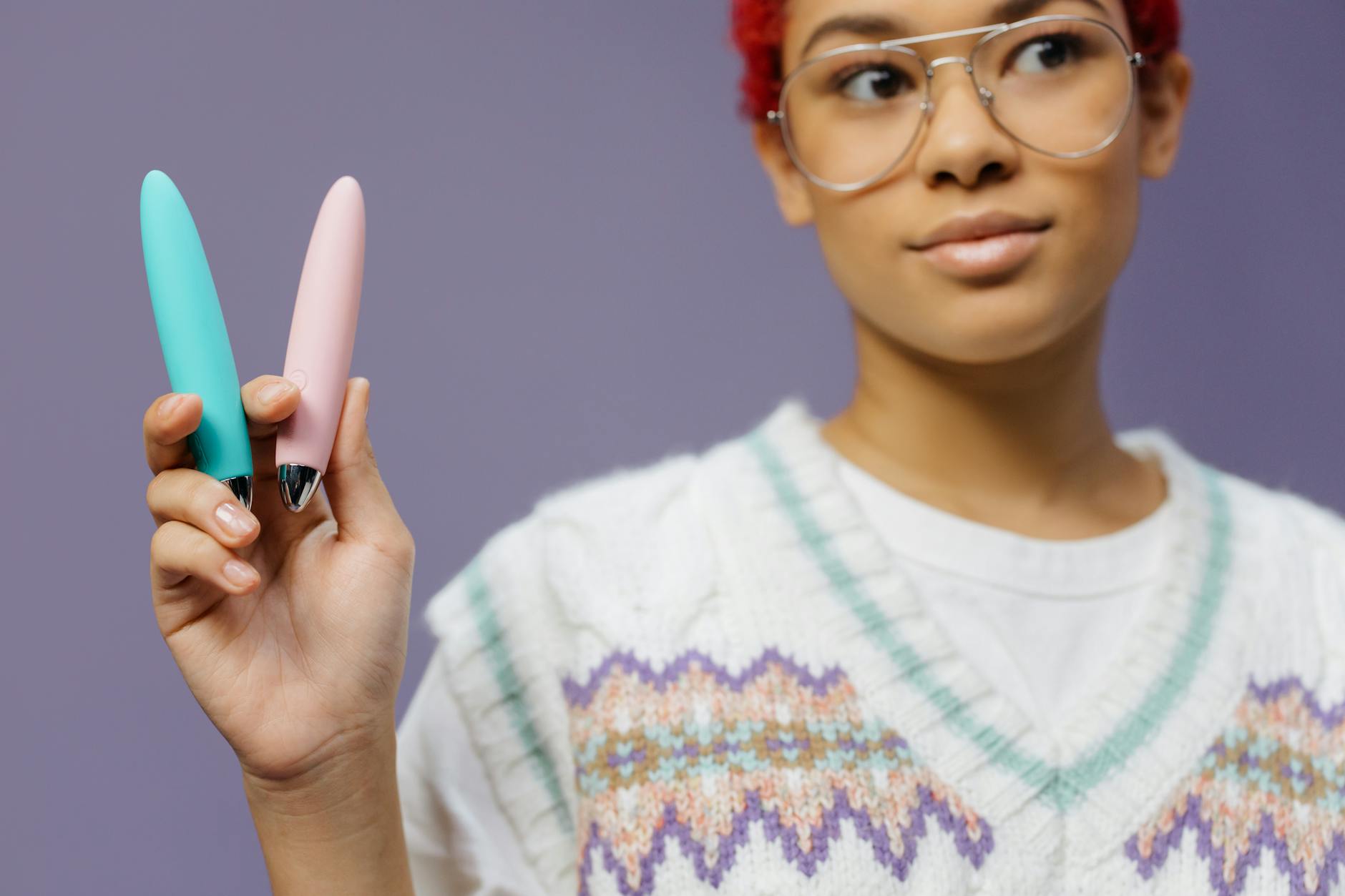
Testosterone is the one people forget about. You produce it too, and it peaks right before ovulation. This is when desire often feels most urgent and straightforward. You don't need as much warm-up. A lemon clitoral vibrator at pattern 3 might feel perfect when, two weeks later, pattern 1 is already too much.
Progesterone is the counterweight. After ovulation, progesterone rises. Estrogen starts to drop. Blood flow decreases slightly. Your clitoris becomes less engorged. Sensitivity shifts toward deeper, more sustained stimulation instead of quick, sharp sensation.
The actual timeline across your cycle
Your cycle typically runs 21 to 35 days. Here's where sensitivity lives:
Days 1-5 (menstrual phase). Estrogen is low. Progesterone is dropping. Blood flow is redirected to the uterus. Your clitoris is less engorged. Many people notice reduced sensitivity and arousal taking longer to build. Some find that penetration or deeper pressure feels better than light, fast movement. This is the time when a lemon vibrator might feel less responsive, or you might want to use it at lower intensities.
Days 6-10 (follicular phase). Estrogen rises. Blood flow increases. Your clitoris plumps up. Arousal accelerates. A lot of people report heightened sensitivity and faster orgasms. This is when the Lem or other clitoral vibrators often feel most potent. You might want to start at lower patterns and build gradually because sensation intensity jumps.
Days 11-14 (ovulatory phase). Testosterone surges alongside a sharp estrogen peak. This is often the sweet spot for desire and orgasm intensity. Sensitivity is high but not always uncomfortable. Many people find this is when they can handle more intensity, faster patterns, and less warm-up. If you've ever felt unstoppable sexually, this might be why.
Days 15-20 (early luteal phase). Estrogen and testosterone drop suddenly after ovulation. Progesterone starts climbing. Sensitivity is still decent, but arousal might feel less urgent. Your body is shifting gears. Sustained vibration often feels better than variable patterns.
Days 21-28 (late luteal phase). Progesterone is high. Estrogen drops further. Sensitivity can swing toward either heightened or muted, depending on your individual hormones. Some people experience painful stimulation they didn't expect. Others need more intensity to reach orgasm. This unpredictability is completely normal.
Why your lemon vibrator behaves differently
It's not the vibrator. It's the interface between your body and the vibrator.
When estrogen is high and your clitoris is engorged, you feel more quickly. A lemon sucker or clitoral vibrator makes contact with more sensitive tissue. The suction pattern that felt perfect at day 14 can feel aggressive at day 21. You're not broken. Your tissue is literally less swollen.
The same applies to pressure sensitivity. During your follicular phase and ovulation, moderate pressure feels precise and effective. During your luteal phase, the same pressure might feel blunt or even uncomfortable because your tissues are less engorged and your nerve endings are more irritable. This is why some people find deeper vibration or pulse patterns work better in the luteal phase.
Arrousal buildup also changes. Higher estrogen means your parasympathetic nervous system (the arousal side) activates faster. You need less warm-up. Your brain catches the signal quicker. During the luteal phase, arousal takes longer, but once it builds, it can be incredibly intense.
How to work with these shifts
First, track it. You don't need an app for six months. Just mark your cycle start and note when you notice changes in how stimulation feels. Most people find a pattern within two or three cycles.
Second, adjust expectations based on the phase. During high-estrogen phases, you might want to explore faster patterns or higher intensities. During the luteal phase, especially late in it, give yourself longer warm-up time and consider lower, steadier patterns.
Third, pay attention to what comfort looks like. If something usually feels good but hurts during a specific phase, that's not a sign the toy is wrong. It's usually a sign that your tissues need a different approach. Water-based lubricant helps enormously during phases when sensitivity feels raw. Slower warm-up helps when arousal takes longer.
Fourth, remember that stress, sleep, and relationship dynamics overwrite hormones. If you're exhausted or anxious, your cycle advantage disappears. You won't feel the testosterone surge if your nervous system is already activated by worry.
When to talk to a doctor
If your pleasure experience is predictably painful during certain phases, that's worth investigating with a gynecologist. Sometimes it's hormonal. Sometimes it's pelvic floor tension. Sometimes it's a sign of something like endometriosis or PCOS that affects sensation.
If your cycle is longer than 35 days or shorter than 21, or if you're not ovulating at all, that also changes the baseline. You might have a different hormonal architecture, and what I've described here won't match your timeline.
But most of the time, cycle-related sensitivity shifts are completely ordinary. Your body is working exactly as designed. The pleasure experience just isn't flat. It's a landscape that moves.
The permission piece
Here's what I want you to know: you don't have to optimize every single encounter. Some days your lemon vibrator will feel like the best decision you ever made. Some days it'll feel meh. Both are fine. Your pleasure doesn't have to be consistent to be real.
But if you spend most of your cycle feeling frustrated, and then you realize half of that is just bad timing, suddenly you have agency. You can work with your body instead of thinking your body is broken. You can reach for the right tool at the right time. You can give yourself more warm-up during phases that need it. You can know that day 23 doesn't define day 10.
That's the real power here. Not perfection. Information.