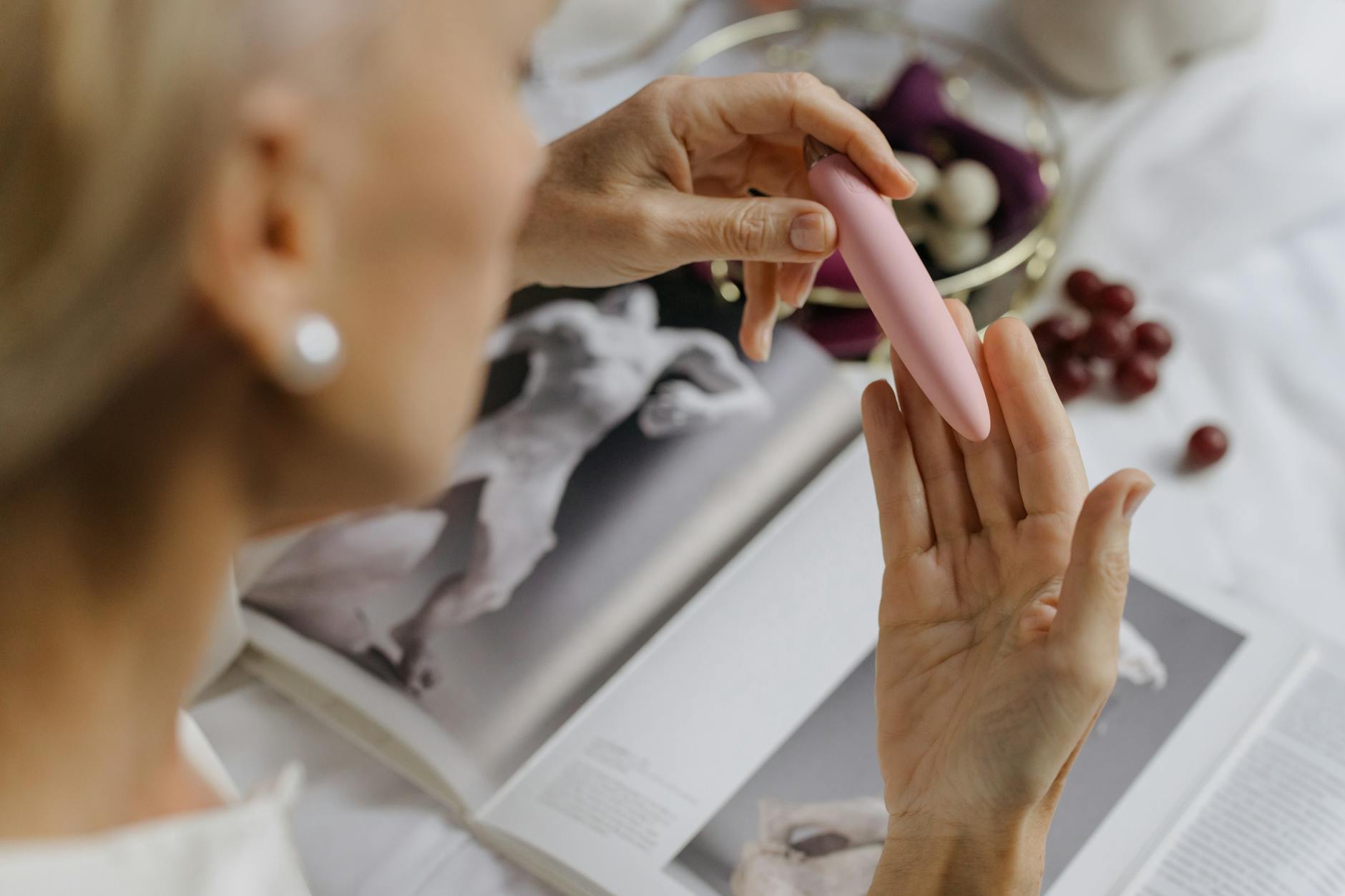
Here's what nobody tells you about clitoral numbness
Your clitoris didn't break. The nerve endings are still there. But when you've been chasing sensation with the same approach for months (or years), your body stops responding the way it used to. It's not a personal failure. It's how desensitization works: constant pressure, same rhythm, same intensity creates a neurological adaptation. Your nervous system essentially says "okay, this is the baseline" and raises the threshold for what feels like anything at all.
The good news is that sensation doesn't have to stay dormant. The lemon vibrator works differently than what probably caused the problem in the first place, and understanding why changes everything about how you'll use it.
Why clitoral desensitization happens in the first place
Three main culprits lead to that numb feeling.
Overstimulation from high-intensity vibrators. If you've been relying on powerful bullet vibrators or wand vibrators at maximum intensity for extended sessions, your nerve endings adapt. Higher intensity doesn't eventually feel better. It becomes the new "normal," and lower sensations disappear from your awareness entirely.
Excessive pressure or friction. Vigorous rubbing, rough handling during manual stimulation, or aggressive toy use can create micro-trauma to tissue and temporarily deaden nerve response. The body protects itself by numbing the area. It's a useful short-term defense mechanism that sometimes overstays its welcome.
Repetitive solo sessions without variety. When you use the exact same technique, pressure, rhythm, and toy every single time you masturbate, your nervous system becomes incredibly efficient at that one pathway. It stops lighting up for anything else. This is especially common for people who discovered one thing that works and then rode that wave for years without changing anything.
The fourth invisible factor: stress and disconnection. When you're anxious, burned out, or emotionally checked out from a partner or from yourself, the sympathetic nervous system (your fight-or-flight response) dominates. Arousal lives in the parasympathetic nervous system (rest-and-digest). You can't access pleasure from a state of threat, and your body will numb itself rather than respond. This is why meditation, therapy, or relationship repair sometimes does more for sensation than any toy ever could.
How the lemon vibrator creates sensation differently
The lem vibrator uses air-pulse technology instead of traditional vibration. Instead of shaking back and forth at a set frequency, it creates rhythmic suction and release. This does three things that traditional vibrators don't do as effectively.
It activates different nerve clusters. Your clitoris has thousands of nerve endings arranged in different layers and densities. High-frequency vibration tends to numb the superficial nerves while potentially irritating them. Air-pulse sensation targets deeper nerve networks and does so more gently. It feels distinctly different because your nervous system processes it as a new stimulus. Your body hasn't adapted to it yet.
It changes stimulus intensity gradually. The lemon vibrator has adjustable settings (typically 1-10 or similar intensity scaling), and the difference between level 3 and level 5 feels noticeable instead of the jump from medium to maximum that makes many vibrators feel abrupt and overwhelming. This gentler progression means you can stay in pleasure territory instead of jumping straight to potential overstimulation.
It invites exploration instead of grinding. Because suction sensation feels less "pushing" and more "drawing," it naturally encourages longer sessions where you're staying attuned to your body instead of chasing a finish line. The nervous system calms down and begins to wake up again.
The reset protocol: using your lem vibrator to restore sensation
If you've been numb for a while, don't jump straight to pleasure. First, you're going to reset.
Week one: sensation mapping, not orgasm.
Set aside 15-20 minutes in a quiet, warm space. No pressure for outcome. Use your lem vibrator on levels 1-2. Start on your outer labia, thighs, anywhere but the clitoris. Slowly move toward the clitoral area but don't land on the head directly yet. Notice what you feel. Tingling? Warmth? Subtle pressure? Even "nothing" is data. The goal is to wake up nerve endings, not to come.
Do this three times over the week. No expectations for progression.
Week two: gentle clitoral introduction.
Now use the lem on your clitoris, but only on level 1-3. Keep the session short, 10 minutes max. Don't try to push toward anything. If you feel frustration creeping in (you will), stop and do something else. You're retraining your nervous system, not punishing yourself.
Week three: add variability.
Alternate pressure levels. Move between your inner and outer labia and your clitoris. Change the rhythm of how you're moving the toy. The variety is the medicine here. Your nervous system stops adapting when it can't predict the input.
Weeks four and beyond: trust the progression.
By now, many people notice sensation returning. Sensation that felt numb starts to feel like subtle pleasure. Subtle pleasure starts to feel like actual arousal. You're not forcing it. You're creating the conditions for it to happen naturally.
What to avoid during reset
Don't use any other vibrators while you're resensitizing. That high-intensity device that "finally" gets you somewhere is the reason you're numb in the first place. Pause it entirely for at least 4-6 weeks. I know that sounds hard. It's worth it.
Don't have a deadline for results. If you approach this as "I'm giving myself three weeks and then I should be fixed," you're adding pressure, which activates the sympathetic nervous system, which makes sensation harder. This takes as long as it takes. For some people, three weeks. For others, three months. Both are normal.
Don't use numbing lubes, which seem helpful but actually make desensitization worse. Stick to water-based lubricant that enhances sensation, not masks it.
Don't solo this entirely if emotional disconnection is part of your picture. If numbness is tied to relationship stress, resentment, or unresolved conflict, a therapist or couples counselor will do more for you than any tool. Your body isn't numb by accident.
Rebuilding pleasure with a partner
If your numbness affects partnered sex, have the conversation before you start using the lem. "My body has needed different stimulation, and I'm using a tool to wake up sensation. I'd love your help." Partners often think desensitization is about them. It almost never is. Naming it removes the shame and the weird silence.
You might use the lem alone first, then introduce it to partnered sessions once sensation starts returning. Or your partner might be curious to use it on you. That's entirely up to you and what feels right in your dynamic.
When sensation returns (and it usually does)
Once you've spent a few weeks with gentler stimulation and variety, most people report that sensation starts coming back. The tingling returns. Arousal builds differently. Orgasms might feel different than they used to (deeper, more diffuse, sometimes more intense). That's all normal. Your nervous system is learning a new language.
Don't go back to the old intensity patterns just because sensation is back. Variety is the long-term insurance against numbness. Use your lem at different levels. Alternate between toys. Change positions. The specificity that made you numb in the first place is what will make you numb again.
Your pleasure matters. The fact that you're reading this means you already know that. Resensitizing takes patience and consistency, but it works. Your clitoris isn't broken. It's just waiting for you to meet it differently.
FAQs: numbness and resensitizing
How long does it actually take to feel sensation again?
It varies widely depending on how long you've been numb and how intensive your overstimulation has been. Some people feel a shift within 2-3 weeks. Others take 8-12 weeks to notice real change. The timeline isn't linear either. You might feel great on week four and regress on week five. That's your nervous system recalibrating. Stick with it.
Can I still use other toys while I'm resensitizing with the lemon vibrator?
Not during the reset phase. The whole point is to interrupt the adaptation loop. Using multiple vibrators, especially high-intensity ones, resets the clock. Once sensation has returned and you've practiced variety for a month, you can reintroduce other toys. But don't use them at maximum intensity. The goal is to build sustainable pleasure, not to chase the strongest sensation.
What if I feel worse before I feel better?
That's sometimes part of the process. When you stop intense stimulation, your body might feel extra numb for a few days as it adjusts. You might also notice you're more aware of the numbness itself, which feels like regression but is actually progress (you're noticing your body again). If this lasts beyond a week or if pain develops, check in with a pelvic health physical therapist or gynecologist.
Is my numbness permanent if nothing has worked yet?
No. Clitoral nerves are resilient. Even after years of numbness, resensitizing is almost always possible. If you've tried multiple approaches without success, that usually means either the wrong approach for your body or an underlying factor (hormonal, relationship-based, medical) that needs attention. A pelvic health specialist can help identify whether there's something else going on.
Should I tell my partner I'm feeling numb?
Yes. Not as an accusation or a complaint, but as information. "My body's been needing something different lately. I'm exploring what that is." Partners often worry that numbness means the relationship is the problem. It almost never is. Naming it removes that fear and often deepens intimacy. Plus, having supportive presence while you're resensitizing changes the nervous system state entirely.
Can stress and anxiety cause clitoral numbness on their own?
Absolutely. Chronic stress keeps you in sympathetic nervous system activation, which quite literally shuts down arousal pathways. If your numbness started around a major life stressor (breakup, work crisis, health issue, family conflict), addressing the stress through therapy, meditation, or lifestyle change might be as important as any tool. The lemon vibrator helps. Reducing threat activation in your nervous system changes the game.
Is air-pulse technology actually better for desensitized tissue than regular vibration?
For many people, yes. It activates different nerve pathways, which means your nervous system registers it as "new" and can't fall into the same adaptation loop immediately. That said, everyone's body is different. Some people find that a much lower-frequency vibrator (something gentler than they've used before) is the reset tool they need. The key is changing the input, not the specific technology. Air-pulse is just a particularly effective way to do that.
The bottom line
Desensitization is reversible. Your body hasn't forgotten how to feel pleasure. It's just adapted to a pattern you're finally ready to change. The lemon vibrator works well for resensitizing because it disrupts the old pattern and invites you to pay attention again. But the real work is patience, consistency, and permission to explore your pleasure differently than you have before. That's where the magic happens.