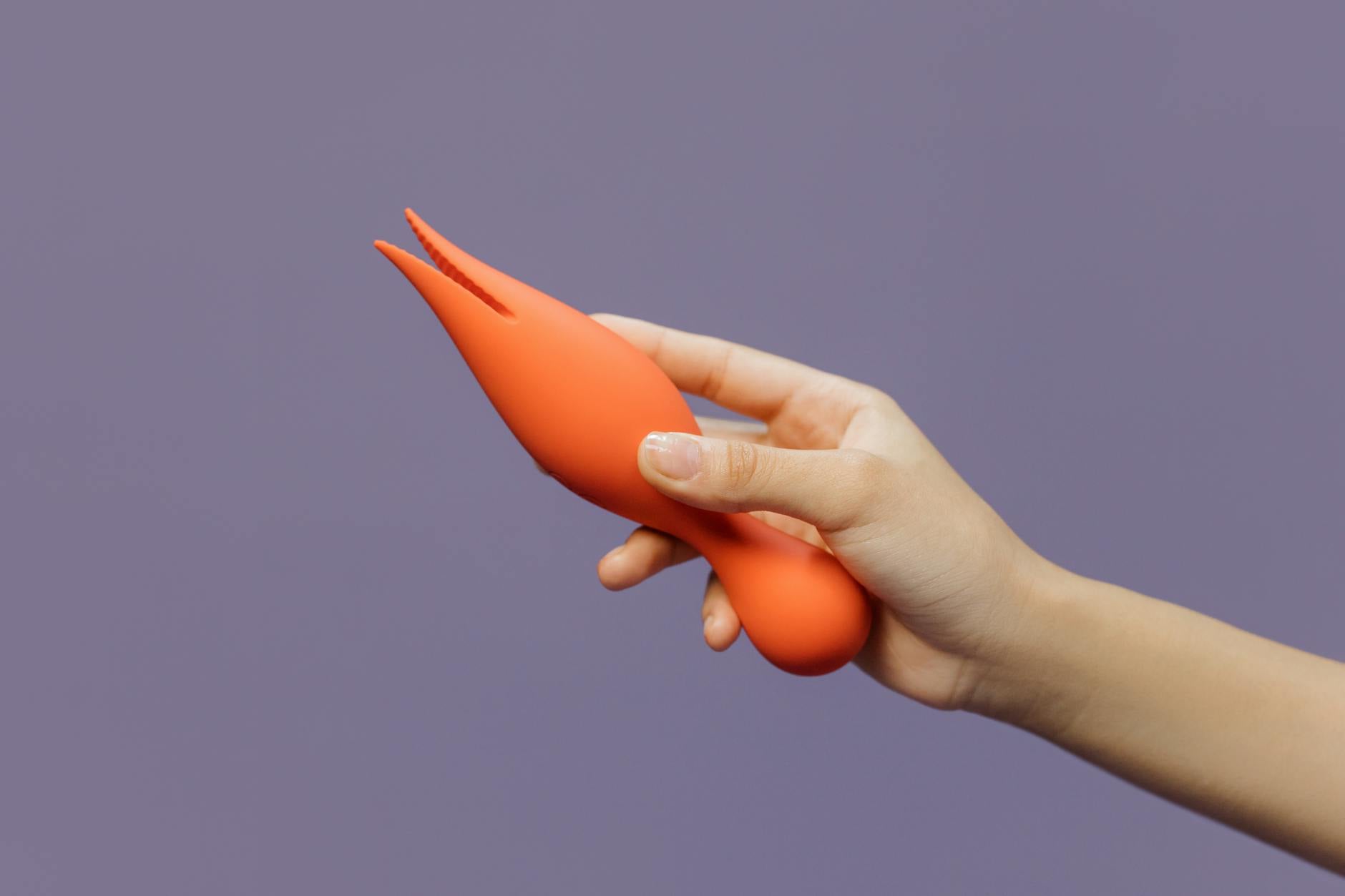
Here's the thing about inconsistent orgasms
You're not broken. Your body isn't failing you. What's actually happening is that your nervous system has a specific bandwidth for building arousal, and when external conditions, stress, or timing pressure interrupt that bandwidth, the whole chain reaction stalls. Most people don't talk about this because orgasm inconsistency feels like a personal failure. It isn't. It's a pattern that lemon vibrators and clitoral suction devices are specifically designed to solve.
When I work with couples or individuals navigating this, the first thing I explain is that inconsistency usually points to one of three things: variable arousal sensitivity (your body's ability to register pleasure shifts day to day), the plateau problem (you build arousal fine, then plateau before reaching climax), or recovery demand (you need more time between stimulation and climax than your situation allows). Lemon clitoral vibrators address all three because they work differently than conventional vibration.
Why suction changes the consistency equation
Let me break down the neurology first because it matters. The clitoris has about 8,000 nerve endings concentrated in an incredibly small area. When you use a traditional vibrator, you're asking those nerves to fire in sync with oscillation. That feels good, but it requires your nervous system to build and sustain arousal at a specific frequency. If you're having an off day, if you're tired, or if you're carrying stress, your body won't sync with that frequency cleanly.
Lemon vibrators and suction-based devices like the Lem work through a different mechanism. Instead of vibration, they create a gentle seal around the clitoral area and pulse the pressure. This stimulates the same nerve endings, but it doesn't require your body to maintain frequency lock. You can think of it like the difference between someone tapping your shoulder at a set rhythm versus someone gently squeezing your shoulder. Both create sensation, but one is less dependent on your body cooperating with an external beat.
That's why people with variable arousal patterns or plateau issues see dramatic shifts with a lemon clitoral vibrator. The device works with your body's natural arousal curve instead of imposing one.
The three consistency problems lemon vibrators solve
Variable arousal sensitivity. Some days your body lights up at light touch. Other days you feel like you're wearing a wetsuit. This is normal. Hormones, stress, hydration, and sleep all shift your sensitivity baseline hour to hour. The problem is that a fixed-frequency vibrator doesn't adjust. A lemon sucker adjusts because you control the pressure intensity. You can start at the gentlest setting and let your body's response guide you upward, rather than starting at a preset vibration level that might be too much or too little.
The plateau trap. You get aroused, things build nicely, and then you hit a ceiling. You plateau. Your arousal stops escalating even though you want it to. This happens because conventional vibration can desensitize the area if you've been using it for 10-15 minutes at the same intensity. Your nerve endings adapt to the frequency. A lemon clitoral vibrator solves this because the pulsing pattern is gentler and less likely to cause that kind of habituation. You can stay in the pleasure zone longer without hitting a wall.
Recovery demand. Some bodies need a true break between arousal building and climax. You can't go from 4/10 arousal to orgasm in three minutes. You need 8-10 minutes minimum, or you'll plateau again. Lemon vibrators help here because the sensation is compelling enough to hold your attention for longer without becoming irritating. You can build arousal at a slower, steadier pace.
How to actually use a lemon vibrator for consistency
Start with timing expectations. Don't assume orgasm will happen in the first five minutes. People with inconsistent orgasm patterns typically need 12-20 minutes total, and that's normal and healthy. Build that into your timeline.
Begin at the lowest setting. Lowest. Seriously. Set the expectation that you're spending the first 3-5 minutes at intensity level 1 or 2. Your job during this phase isn't to climax. It's to let your body's arousal sensors wake up. Pay attention to what feels good at this low intensity. This calibration matters because it tells your body it's safe to build arousal gradually.
Move through patterns, not intensity alone. If your lemon vibrator has multiple pulse patterns, cycle through them every 2-3 minutes. Don't just turn the dial up. Different patterns stimulate different nerve clusters. Switching between them prevents the plateau trap because you're constantly giving your nervous system something slightly new to process.
When you hit arousal building, lock in. Once you feel clear arousal climbing (you're at 5/10 or above), pick the pattern and intensity that's working and stay there for 3-4 minutes minimum. Your body needs continuity to build toward climax. The switch here is deliberate. Early on, variety prevents plateau. Later, consistency builds momentum.
Know your plateau signal. Most people feel it as a moment where intensity isn't increasing even though nothing has changed. The sensation is still pleasant but it's not escalating. This is the cue to either switch patterns again, increase intensity slightly, or pause for 15-30 seconds (let arousal drop just a notch), then restart at the same setting. That tiny pause resets your nerve sensitivity and gets you past the wall.
What to do if you're with a partner
If you're using a lemon vibrator with a partner, the consistency problem often gets worse because you're managing two people's timelines. Partners often have different arousal curves. One person needs 20 minutes of foreplay. The other could climax in five. Synchronizing that creates pressure, and pressure kills arousal.
The answer is to separate the two conversations. Use the vibrator for your own arousal building first. Spend 10-12 minutes getting to a clear arousal state on your own terms. Then, when you're approaching that 6-7 out of 10 arousal zone, bring your partner in. You're no longer starting from zero in front of them. You're starting from a place where your body already believes pleasure is possible. That removes the pressure of "performing" responsiveness on someone else's timeline.
You can read more about this dynamic in our guide on how to use lemon vibrators for better orgasms when partners have different orgasm timings. The core principle is the same. Your pleasure deserves its own timeline.
The role of breathing and attention
Here's what people don't talk about enough. Inconsistent orgasms often correlate with inconsistent attention. You're not fully present. You're thinking about whether this is taking too long, or whether your partner is bored, or whether you should have started sooner. That mental chatter is arousal poison.
When you're using a lemon clitoral vibrator, use it as an attention anchor. Notice the sensation closely. Notice the specific pressure zones that light up. Notice whether you prefer slow pulses or quick ones. Notice when you shift from pleasure-focused to achievement-focused. That last one is key. The moment your brain switches from "this feels good" to "I need to come," arousal often drops. Lemon vibrators give you something compelling enough that you can stay in sensation mode longer.
Breathe steadily. Not deeply, just steadily. When we're chasing orgasm, we hold our breath. That signals your nervous system to stay guarded. Keep airflow consistent and you keep your nervous system open.
When to troubleshoot versus when to adjust expectations
If you've spent 20 minutes with a lemon vibrator at multiple intensities and settings and nothing is happening, that's not failure. That's data. It might mean you're dehydrated, stressed, on a medication that affects arousal, or simply not in the right headspace today. All of those are real reasons orgasm won't happen, and they're worth noting without judgment.
Keep a tiny log. Just three columns. Date, time spent, outcome (yes, no, plateau). After two weeks, patterns emerge. You'll notice that orgasms happen more reliably on days when you've slept well, or hydrated properly, or used the vibrator in the evening versus morning. That information is gold. It tells you what conditions your body actually needs to build consistent pleasure.
The pleasure beyond orgasm
One thing I want to emphasize: using a lemon clitoral vibrator to work with consistency problems isn't about forcing climax. It's about building a relationship with your body where arousal feels reliable and pleasure feels trustworthy. Sometimes that means consistent orgasms. Sometimes it means discovering that your body's version of "satisfied" looks different than you assumed. Either way, you've solved the inconsistency problem because you're no longer chasing a specific outcome.
Most people find that after four to six weeks of using a technique like this with a lemon vibrator, their general arousal responsiveness shifts. Not because the vibrator is magic, but because you've spent that time building a clearer dialogue with your body.
Frequently asked questions
How long should I really expect it to take to reach orgasm with a lemon vibrator?
If you have inconsistent arousal patterns, plan for 12-20 minutes total. That might feel long, but it's what allows your body to build arousal steadily without hitting a plateau wall. Some people climax faster, some slower. Neither is better. The point is removing the time pressure that usually kills consistency in the first place.
Can I use a lemon clitoral vibrator every day without desensitizing myself?
Yes, because suction stimulation doesn't cause the same habituation that direct vibration does. That said, if you notice your response dropping, take a 3-5 day break. Your nerve endings need occasional reset. You'll come back more responsive than before the break.
What if I use a lemon vibrator but still can't reach orgasm?
That's worth exploring with your GP or a sex-positive therapist, especially if it's a recent change. Inconsistent orgasms can point to hormonal shifts, medication side effects, pelvic floor tension, or psychological factors. A lemon vibrator is a helpful tool, but it's not a workaround for underlying health things that need attention.
Should I use lube with a lemon vibrator?
Yes, always. Water-based lube helps the suction seal work better and protects delicate tissue. It also signals to your body that pleasure is happening, which supports arousal building psychologically.
If I'm on antidepressants, will a lemon vibrator still work?
Most people find suction devices more effective than vibration when taking SSRIs or SNRIs because they don't rely on high-frequency stimulation. That said, some medications do affect arousal more than others. Our guide on how lemon vibrators improve pleasure when taking antidepressants goes deeper into this. Talk to your prescriber too.
Is the Lem (a lemon clitoral vibrator from Hello Nancylem) better than other lemon suction toys?
The Lem is specifically designed with multiple pulse patterns and intensity levels, which addresses the variety and intensity needs I described above. That said, the best device is the one that fits your body and your preferences. What matters is choosing something with adjustable intensity and patterns so you can work with your body's actual arousal curve.
How do I know if my consistency problem is physical or psychological?
Often it's both. Stress, relationship dynamics, and self-criticism all affect arousal physically. That said, if inconsistency is recent and accompanied by pain, dryness, or loss of sensation, it's worth a GP visit. If it's been lifelong and you're healthy, the issue is usually learned patterns around pleasure that a technique like this helps rewire.
Can partners help me troubleshoot consistency problems?
Yes, but only if the focus is on supporting your arousal, not orchestrating your climax. The best partner role is creating time and space for you to use the vibrator, checking in on what you're learning about your body, and removing the pressure to climax on a schedule. That's different from them trying to "make" it happen faster.