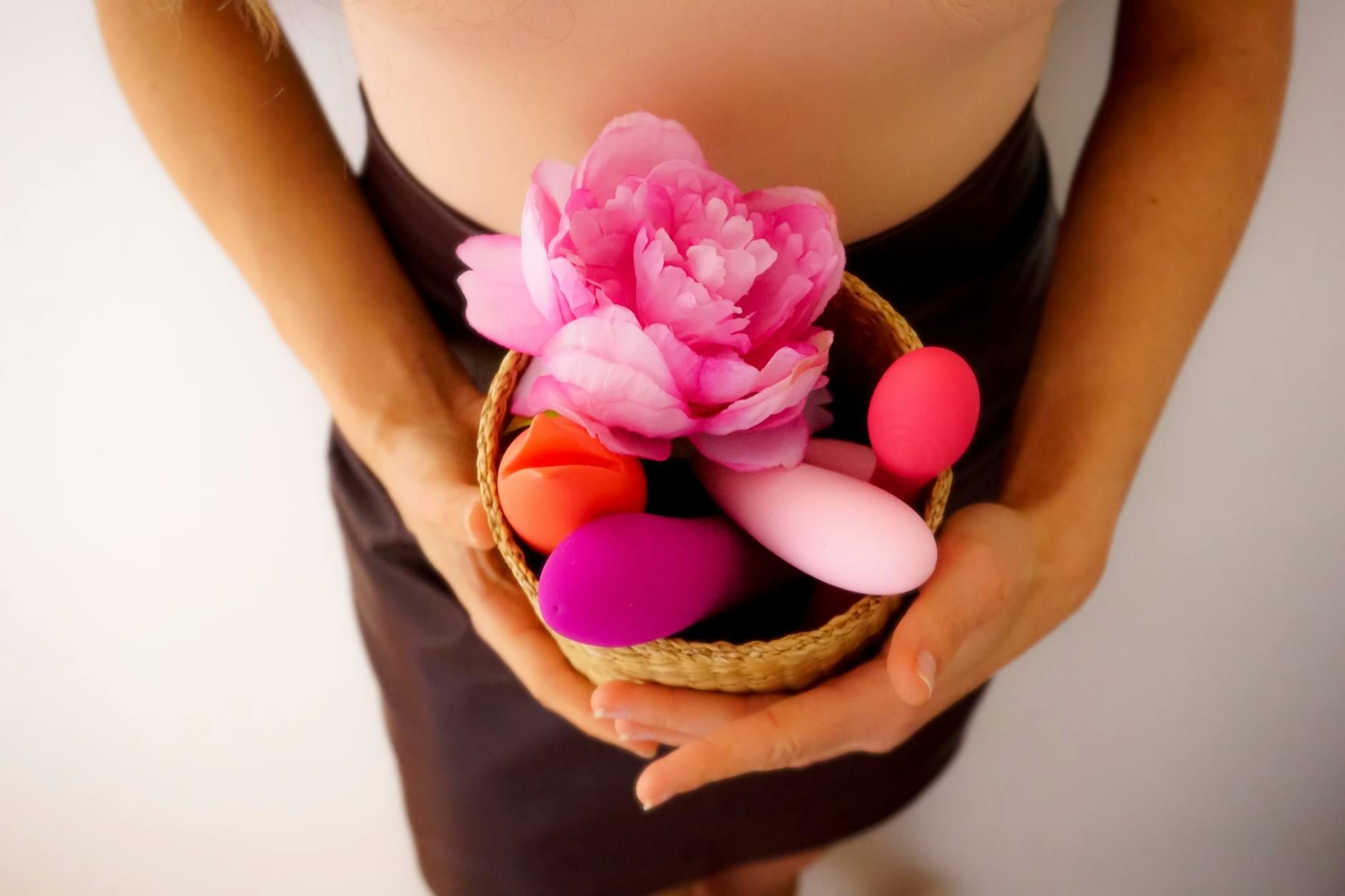
Here's what nobody tells you about your cycle and pleasure
Your menstrual cycle doesn't just affect your mood, energy, or skin. It rewires your nervous system, changes blood flow to your genitals, and fundamentally alters how sensitive you are to touch and stimulation. Which means the same lemon clitoral vibrator setting that feels incredible on day 10 might feel overwhelming on day 24.
Most people with cycles never connect the dots. They assume inconsistency means something's wrong with them. It doesn't. It means your body is cycling through four distinct phases, each with its own arousal signature.
How your cycle actually changes sensation
Estrogen peaks twice during your cycle. The first peak arrives right before ovulation, around day 12 to 14. The second peak is smaller and happens around day 21. Progesterone rises after ovulation and stays elevated until your period starts.
These hormones don't just exist in your bloodstream. They dock onto receptors in your clitoris, your vagina, your skin, and your brain. More estrogen means increased blood flow to your genitals, higher sensitivity to touch, and faster arousal. Higher progesterone can make stimulation feel more intense, orgasms more full-bodied, and sensation more concentrated.
The practical result? A lemon sucker that feels gentle during your period might feel too strong during ovulation. A setting you love mid-cycle might feel dull during the luteal phase. This isn't dysfunction. It's your body working exactly as designed.
Menstruation phase: go slow and grounded
During your period (days 1 to 5), estrogen and progesterone are both low. Your pelvic floor is naturally more relaxed. Blood flow is diverted toward menstruation rather than genital arousal.
What this means for lemon vibrators: lighter touch, slower patterns, and lower intensity settings feel best. Your clitoris is less engorged than it will be later in your cycle, so direct suction patterns can feel sharp rather than pleasurable.
Try starting on pattern 1 or 2 with the Lem vibrator. Keep warm. Some people find that pleasure during menstruation helps ease cramps because orgasm releases tension in the pelvic floor. If that's you, stay with what feels soothing rather than reaching for peak intensity.
Many people also feel more emotionally connected to sensation during their period. The mental clarity isn't there yet, so this is a good phase for slower, longer sessions focused on how things feel rather than the destination of orgasm.
Follicular phase: build gradually and experiment
Follicular phase starts on day 1 of bleeding and runs until ovulation (roughly day 14). As this phase progresses, estrogen climbs steadily. By day 10 or 11, you'll notice arousal building naturally. Your clitoris starts to engorge. Sensation sharpens.
This is when lemon vibrators start to feel really good. As estrogen rises, your tissues thicken slightly, blood flow increases, and your nervous system becomes more responsive. You can layer in more complex patterns. Try starting with pattern 2 and working up to pattern 5 by the end of this phase.
Your body also has more energy during follicular. You might want longer sessions, more varied patterns, or even multiple orgasms. This is the phase where experimentation pays off. If you've been curious about a new pattern or technique, try it now.
One note: as you approach ovulation, you might notice increased sensation or even some sensitivity. This is normal. Your clitoris is fully engorged. If direct suction starts feeling too intense, dial back one pattern level and extend your session.
Ovulation phase: peak intensity and fast response
Ovulation happens around day 14. For two to three days surrounding ovulation, estrogen peaks and then begins to fall. This is often the phase where people report feeling the most horny, most responsive, and most capable of intense orgasms.
Your clitoris is maximally engorged. Arousal builds fast. You might orgasm more easily or more intensely than other times in your cycle. Here's where you can push your lemon vibrator patterns into higher intensities if that appeals to you. Many people who use Hello Nancy lemon clitoral vibrators report that patterns 6 and 7 feel revelatory during ovulation.
The trade-off: sensitivity is high. What feels amazing one moment might feel too intense the next. This is an intuitive phase. Check in with what your body wants session to session. Some cycles you'll want peak intensity. Other cycles, even during ovulation, you might prefer gentler stimulation.
Also worth knowing: this is when your cervix shifts position slightly, your vaginal lubrication increases naturally, and your body temperature rises slightly. All of this supports more intense sensation.
Luteal phase: go full-bodied and patient
After ovulation, progesterone rises. You enter the luteal phase, which lasts from ovulation until your period starts (roughly days 15 to 28). This is the longest phase and the most nuanced for pleasure.
Early luteal (days 15 to 20) still feels pretty good. Progesterone hasn't climbed too high yet, and you've still got some residual estrogen. You can still access those good orgasms and strong sensation.
Late luteal (days 21 to 28) shifts. Progesterone peaks. For many people, arousal flattens slightly. Sensation can feel less acute. Your pelvic floor might tense up more easily. Mental clarity dips. Fatigue often sets in.
For lemon vibrators during late luteal, this means slowing down again. You might need longer warm-up time. Patterns that felt perfect during ovulation might feel numbing. Some people find that switching to medium patterns (3 to 5) and extending session length works better than hunting for the highest intensity.
Progesterone also makes orgasms feel different. They're often more full-bodied and less localized than ovulation orgasms. Some people love this sensation. Others find it less satisfying. Know which camp you're in so you can adjust expectations.
The warm-up timing shifts too
This is something most people miss. It's not just about which pattern feels best. How fast you can get there changes across your cycle.
During the follicular phase and ovulation, arousal builds quickly. You might move from neutral to orgasm in 5 to 10 minutes with the right stimulation.
During menstruation and late luteal, warm-up takes longer. Budget 15 to 20 minutes. Your body needs more time to shift into parasympathetic (rest and digest) mode where arousal lives. This isn't a problem. It's useful information.
Mental presence matters more during slower phases too. If you're distracted during late luteal, getting to orgasm feels impossible. During follicular, your brain almost does the work for you. Knowing this helps you set realistic expectations and plan your sessions accordingly.
Lubrication changes across your cycle too
During follicular and ovulation, natural lubrication increases. You might not need additional lube or only need a little.
During menstruation and luteal, especially late luteal, natural lubrication decreases. A water-based lubricant becomes more important. Even if your lemon vibrator usually feels great without added lube, reaching for it during late luteal makes a real difference.
This isn't about anything being wrong. Hormones literally change how much your vagina produces natural lubrication. Add lube and the experience shifts immediately.
Tracking your own cycle and sensations
Here's where this gets practical. The fastest way to figure out your personal pleasure cycle is to track it.
For one full month, note down the day of your cycle and how your lemon clitoral vibrator feels. Write one sentence. "Pattern 3 felt perfect today." "Needed way more warm-up time." "Orgasm was quick and sharp." "Added lube and everything changed."
After one cycle, patterns emerge. You'll see which phases favor which patterns. You'll notice if you consistently need more warm-up during certain weeks. You'll know when to reach for lube before you think you need it.
This information is gold. It means you stop guessing and start knowing. You show up to pleasure with intention rather than hope.
When cycle tracking gets complicated
If you have an irregular cycle, track it anyway. Patterns still emerge. They might be longer or shorter cycles, but the phases still hit in sequence.
If you're on hormonal birth control, your cycle is suppressed artificially. You might not notice the same peaks and valleys. That's fine. You're not broken. Work with what your body actually does rather than what it would do off hormones.
If you have PCOS, endometriosis, or other conditions that affect your cycle, the phases might feel different or compressed. The principle still holds. Track your own experience. Your body's truth trumps any general framework.
FAQ
How does ovulation actually change sensation with a lemon vibrator?
During ovulation, estrogen peaks and your clitoris engorges with blood. This increased engorgement means more nerve endings are active and your tissue is more sensitive. A lemon sucker works by creating suction and gentle pulses that stimulate these nerves. When your clitoris is engorged during ovulation, these patterns trigger orgasm more easily and often more intensely than during other cycle phases. It's not that the vibrator is different. Your body's responsiveness is elevated.
Can I use the same pattern all month or do I really need to change it?
You can absolutely use the same pattern all month if that's what feels good. Your body will adapt. But most people notice that tailoring patterns to their cycle phase makes orgasm easier, faster, or more satisfying. Think of it like adjusting volume on music depending on the room. You could keep it the same, but turning it up when the room is loud or down when it's quiet changes the experience. Same principle with your cycle.
What if my partner and I have different cycles? How do we use lemon vibrators together?
If one of you menstruates and the other doesn't, your cycle phases create natural rhythm in your relationship. During the other person's ovulation, they might have higher libido or more energy for sex. You can work with this rather than against it. During their luteal phase, they might prefer gentler, longer sessions with a lemon clitoral vibrator. Knowing this ahead of time means you're not surprised or taking reduced desire personally. You're just working with biology. The Hello Nancy lemon vibrator works beautifully for couples navigating these differences because you can easily adjust intensity and pattern to what each person needs on any given day.
Does my cycle affect how long the charge lasts on my lemon vibrator?
No, your menstrual cycle doesn't affect the battery life of your device. What your cycle does affect is how long a session feels satisfying. During ovulation, you might finish in 8 minutes. During late luteal, a satisfying session might be 25 minutes. So the same charge lasts longer or shorter depending on phase. Plan accordingly, but the device itself isn't affected.
Should I avoid using lemon vibrators during my period?
Absolutely not. Pleasure during menstruation is safe and often helps with cramps. The main thing to know is that your sensations and preferences might be different than other times in your cycle. Starting with lower intensity patterns and taking longer warm-up time usually feels better. But there's no medical reason to avoid it. Your clitoris isn't more delicate during your period. Your body just responds differently because of hormonal shifts.
How long does it take to notice the cycle pattern?
Most people notice shifts within one full cycle if they're paying attention. Some notice within a few weeks. If you track even just one sentence after each session, you'll start seeing patterns by week 3 or 4. The key is showing up consistently and being honest about what you notice rather than expecting your cycle to match what you read online. Your cycle is specific to you.