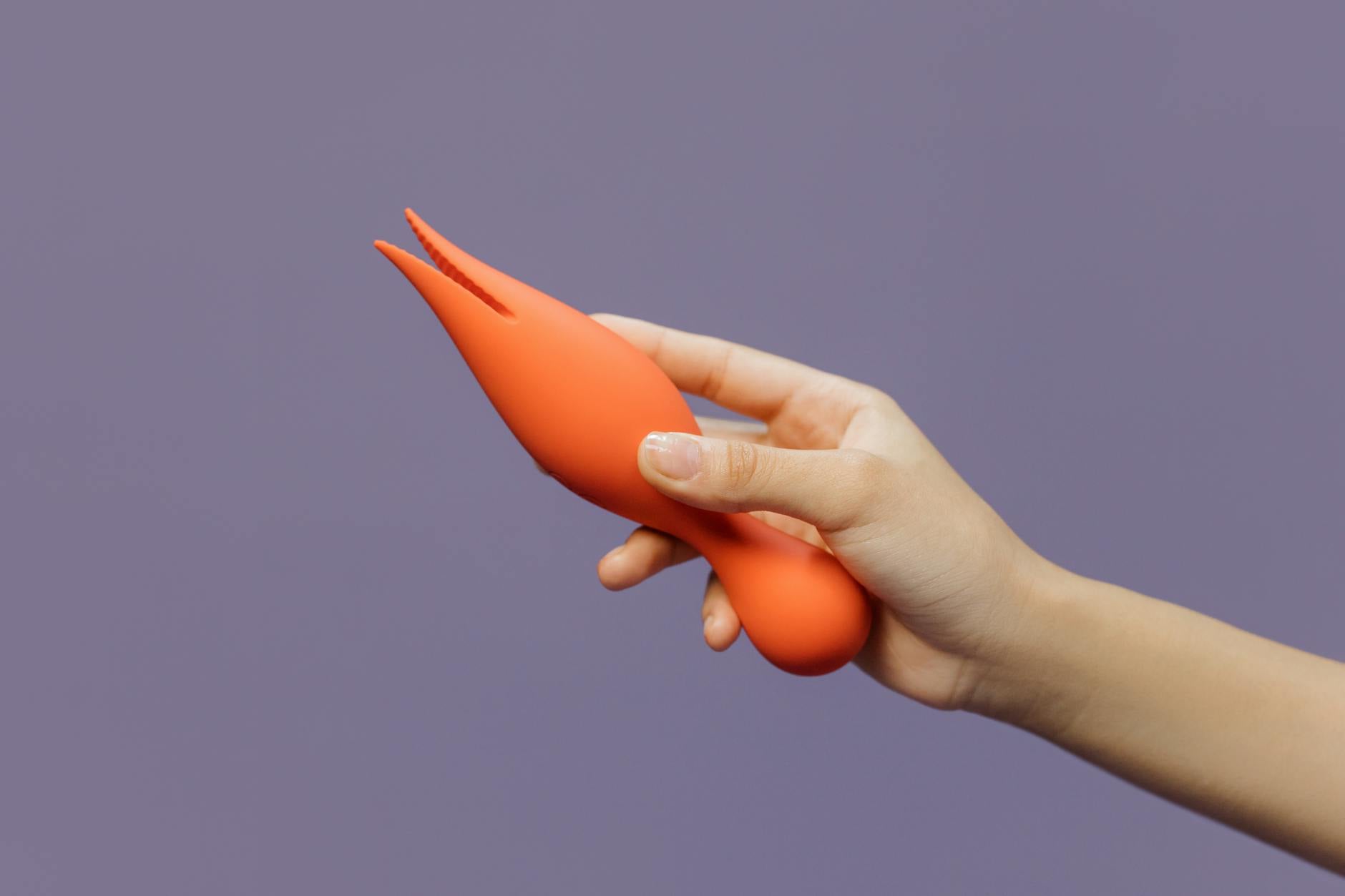
Let's talk about the nervous system mismatch
If you've ever tried a traditional vibrator and felt like your nerve endings were being jackhammered instead of pleasured, you're not alone. And it's not a personal failure. It's neurology.
Vibrators send rapid, repetitive signals directly to the nerve cluster on your clitoris. For some people, this creates a smooth escalation toward orgasm. For others, especially those with sensory processing sensitivity, autism, ADHD, or chronic pain conditions, it feels harsh, chaotic, or even painful. The stimulation overloads before it arouses.
Lemon clitoral vibrators work differently. They use gentle suction instead of direct vibration, which creates a gentler, more diffuse signal to your nervous system. This distinction matters hugely for sensory-sensitive bodies.
How suction changes the signal path
When you use a traditional vibrator, you're applying rapid micro-movements directly to sensitive tissue. It's like someone rapidly tapping your shoulder versus someone placing a hand on your shoulder and holding it. Both register as touch, but the neural pattern is completely different.
Clitoral suction (like the lemon vibrator) creates what I think of as a "pull and release" rhythm rather than a "tap tap tap" rhythm. This pulls blood to the area and engages the tissue in a more gradual way. The sensation is broader, less spikey, and doesn't register as urgently overwhelming to a sensitive nervous system.
For people with sensory processing differences, this gentler intensity curve makes the difference between pleasure and pain. The lemon vibrator doesn't ask your nervous system to handle information overload. It whispers instead of shouting.
Why sensory sensitivity shows up differently in pleasure
Sensory sensitivity isn't just about volume. It's about pattern complexity and predictability.
A vibrator creates unpredictable micro-variations in intensity as your skin shifts position slightly. Your nervous system has to decode thousands of tiny changes per second. If your brain is already wired to notice detail, this becomes cognitive load instead of pleasure.
Suction creates a much simpler, more predictable pattern. The pull is consistent. The rhythm is steady. Your nervous system can relax into it instead of bracing against it.
I've worked with dozens of clients who describe sensory overwhelm during traditional vibrator use. They say things like "it feels like static noise" or "my whole body tenses up" or "I can't focus because the sensation is too scattered." These aren't signs you're broken. They're signs your nervous system processes stimulation more finely than average. For you, a lemon vibrator often feels purposeful instead of chaotic.
The slower arousal advantage
Here's something that surprises many sensory-sensitive clients: you might actually reach deeper, more sustained arousal with a lemon vibrator because you're not exhausting your nervous system in the first two minutes.
Sensory-sensitive people often experience something called "overstimulation crash." You build arousal quickly, then your nervous system hits a limit and shuts down. It's like your nervous system slammed on the brakes. The intensity that felt good at minute three feels intolerable at minute five.
With suction, arousal builds more gradually. Your nervous system has time to acclimate. You're less likely to hit that shutdown point. Many clients describe longer sessions, more consistent sensation, and orgasms that feel less frantic and more grounded.
This is also why a lemon vibrator pairs so well with longer warm-up time. Give your body 20 to 30 minutes to adjust to the sensation. Let arousal build steadily. You might discover you have more capacity for pleasure than you realized.
Texture, material, and fit matter too
Beyond the suction mechanism itself, sensory-sensitive bodies benefit from material consistency. The lemon vibrator is made from medical-grade silicone, which has a smooth, non-porous surface that many sensory-sensitive people prefer. It doesn't create the micro-texture friction that can feel scratchy to sensitive skin.
The shape also matters. The rounded bulb of the lemon vibrator distributes pressure across a wider area instead of concentrating it on one point. This diffusion of sensation is genuinely soothing for sensory-sensitive folks. It's the difference between a point-contact massage and a full palm.
Size and weight factor in too. If you have fibromyalgia, hypermobility, or other conditions that make sustained pressure uncomfortable, a smaller, lighter device like the lemon vibrator reduces muscle fatigue during self-pleasure.
Starting slow without shame
If you're sensory-sensitive and exploring a lemon vibrator for the first time, give yourself permission to start at the lowest setting and stay there.
I've noticed sensory-sensitive clients sometimes feel like they "should" be able to handle higher intensities. There's an invisible social pressure that pleasure devices should feel intense to work. This is false. The setting that feels best is the one that actually delivers arousal and comfort.
Start at pattern one. Spend a full session there. Let your nervous system adapt. Then, when you want to, move to pattern two next time. There's no race. You're not proving anything.
Many sensory-sensitive clients find their sweet spot is actually lower than average, and they stay there permanently. That's not a limitation. That's you knowing your body.
When to layer in other tools
Some sensory-sensitive people benefit from combining suction with other types of stimulation. Internal vibration, for example, creates a different neural signal than clitoral stimulation. Using a lemon vibrator on the clitoris while exploring internal sensation can feel more balanced and less overwhelming than clitoral suction alone.
Partner touch can also change the sensory load. Having a partner hold you, stroke your arm, or apply pressure elsewhere on your body while you use a lemon vibrator can actually reduce overall sensory intensity even though you're adding input. This is because your nervous system distributes attention across multiple signals instead of hyperfocusing on one point.
Experiment with what helps your nervous system stay regulated. Some people benefit from closing their eyes. Some benefit from low music. Some benefit from verbal reassurance from a partner that they're safe and it's okay to let go. Sensory regulation is individual.
Common concerns addressed
"Does clitoral suction feel less intense overall?" Not necessarily. You're shifting intensity to a different part of the pleasure spectrum. Many people describe lemon vibrators as more intense in a deeper, more sustained way, even though they're less sharp than traditional vibration.
"Will I get used to it and need more?" Sensory-sensitive nervous systems don't typically work this way. Most people find a sustainable setting and stay there indefinitely. Your body doesn't need escalating intensity the way some others do.
"What if it still feels overwhelming?" Start even lower, or take breaks. Five minutes of pleasant sensation is better than 15 minutes of overwhelm. You can also explore how to transition to lemon vibrators if you've only used traditional vibrators to understand other entry points.
The bigger picture: pleasure calibrated for your actual nervous system
Sensory sensitivity isn't something to overcome or suppress. It's how your nervous system is built. The right tool isn't the one that pushes you past your limits. It's the one that respects where your nervous system lives.
A lemon vibrator respects sensory sensitivity. It delivers pleasure without demand. It works with your nervous system instead of against it. And honestly, that changes everything.
People also ask
Can you use a lemon vibrator if you have misophonia or sound sensitivity?
Yes. The lemon vibrator is relatively quiet compared to traditional bullet vibrators. If you're sensitive to sound, test it in a quiet room first to understand its acoustic profile. Many people with auditory sensitivity find it manageable, especially if they use headphones with music or white noise during use. You're not required to hear the device to feel it.
What's the difference between sensory sensitivity and sensory defensiveness?
Sensory sensitivity means your nervous system picks up more detail and nuance from sensory input. Sensory defensiveness means your nervous system responds defensively to certain sensations, interpreting them as threat even though they're not dangerous. Both benefit from gentler stimulation tools like lemon vibrators, but the emotional experience differs. If you have sensory defensiveness, starting very slowly and building trust with sensation over time is particularly valuable.
Will a lemon vibrator work if I have ADHD and stimulation usually feels chaotic?
Yes, often better than traditional vibrators. ADHD nervous systems tend to hyperfocus on unpredictable patterns. The steady, simple rhythm of a lemon vibrator gives your brain less to decode, which paradoxically makes it easier to focus on pleasure. Many ADHD clients describe lemon vibrators as actually calming their nervous system during use.
Are there pressure settings that work better for trauma survivors?
Generally, starting very low and staying in control of speed changes is important. Suction offers an advantage here because it's less jarring than vibration. Trauma survivors often benefit from longer warm-up time and the ability to pause without restarting, both of which lemon vibrators allow. Work with a trauma-informed therapist if pleasure exploration feels connected to healing.
Can sensory sensitivity get better over time?
Your nervous system's baseline sensitivity won't change, but your relationship with sensation can. Many sensory-sensitive people find that consistent, positive sensory experiences gradually build tolerance without building numbness. You can work with stimulation that respects your sensitivity and still discover your capacity has grown.
What if I have both high sensitivity and low sensation needs?
That's actually common. Some nervous systems notice detail but need less overall input to feel satisfied. A lemon vibrator works well for this because it delivers noticeable sensation without requiring high intensity. You might use it briefly and feel complete, whereas a traditional vibrator requires longer sessions to reach the same satiation. That's not a problem. That's efficiency.
Your nervous system deserves the right tool
If you've been avoiding pleasure devices because traditional vibrators feel intolerable, a lemon vibrator might be the permission slip you've been waiting for. Your sensitivity isn't a flaw. It's data. Use that data to choose tools that work with you instead of against you. And if you want to explore this further, reach out to Hello Nancy and let's talk about what might work best for your specific nervous system.