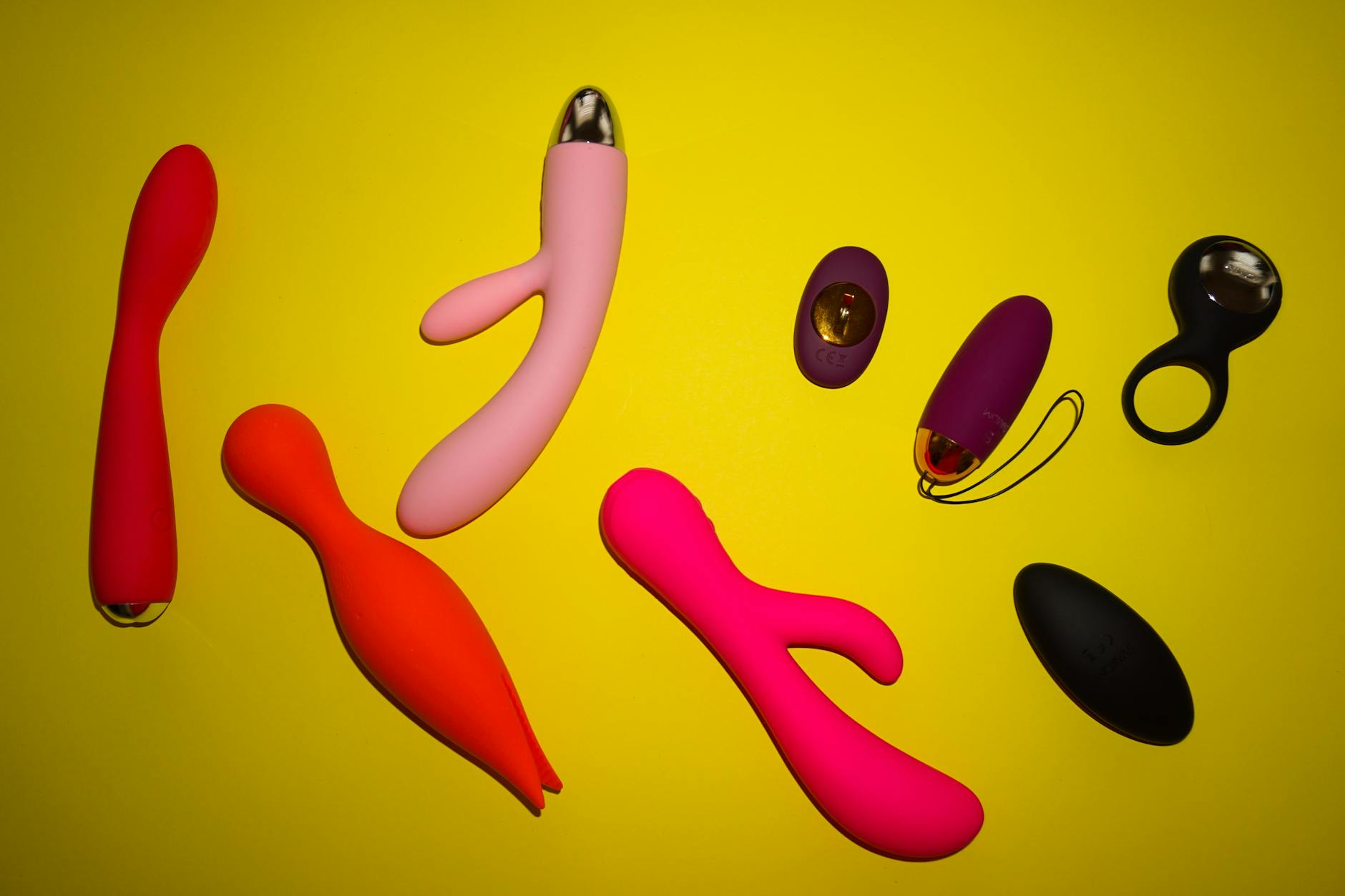
Let's start with the thing everyone's actually worried about
You're wondering if using a lemon vibrator with your partner is going to feel weird, make things less "natural," or somehow signal that one of you isn't satisfied. Here's the truth: couples who integrate toys into foreplay report higher satisfaction and longer-lasting physical sensation than those who don't. It's not weird. It's efficient.
What makes it work is talking about it first, knowing exactly when and how to bring it in, and understanding that a lemon clitoral vibrator during foreplay isn't a replacement for anything. It's an addition.
Why lemon vibrators specifically work better for partnered play
A traditional vibrator requires a lot of direct pressure and works best when you're controlling the motion yourself. A lemon sucker (the air-pulse clitoral vibrator) works differently. It's less dependent on you or your partner holding it perfectly still. The suction sensation is less sensitive to angle and pressure, which means less fumbling during foreplay.
That matters because partnered play has variables: someone's weight shifting, different angles, hands in the way, things moving faster than expected. Lemon vibrators are forgiving in that context. The sensation is more stable even when the positioning isn't perfect.
For partners specifically, this means:
- Your hands stay free. One partner can use the lemon vibrator while the other engages in other touch or penetration. It's not a one-handed game.
- Less pressure on you to "do it right." The toy does most of the work. You're just holding it in place.
- Easier to communicate. Because the sensation is more consistent, it's easier to say "a little higher" or "softer" and have your partner actually achieve that.
The conversation you need to have first
Honestly though. You can't just pull out a lemon clitoral vibrator mid-foreplay without context and expect it to land well. That's where most people get stuck.
The conversation doesn't need to be heavy. It can be light and factual: "I've been reading about these lemon vibrators. People say they feel really different. Want to try one together sometime?" That's enough. You're not asking for permission. You're naming something you're curious about and checking if they're curious too.
If they say no, that's real information. Don't push. If they say yes or "maybe," the next step is logistics. When does your partner usually feel most receptive to trying something new? Some people are most open early in a session. Others need to feel relaxed and confident first. Ask.
You might also ask what they're curious about or what they're nervous about. Some partners worry they'll feel less needed. That's worth naming directly: "I want you to use this with me. I want your hands and your attention on me while it's happening." That changes the energy entirely.
The actual timing inside foreplay
Bring the lemon vibrator in after arousal has already started. Not at the very beginning.
Why? Psychologically, it feels less clinical that way. You've already been touching, kissing, building something. Now you're adding to it, not replacing it with a toy from cold. That distinction matters for how your brain processes the experience.
In practical terms, I usually recommend:
1. Ten to fifteen minutes of standard foreplay first. Kissing, touching, whatever you normally do. This establishes rhythm and lets arousal build.
2. Then, mention the toy casually. "Want to try that thing?" Not a big announcement. A question asked in the middle of kissing or touching.
3. Get it out while you're still touching. Don't make them lie still while you hunt for it in a drawer. That kills momentum. Have it nearby. Grab it like you're grabbing a condom.
4. One partner operates it. Usually the person with the penis or the less-familiar partner starts. The person receiving directs: "A bit lower," "Try pattern three," "Soften it." This gives you both something specific to do. It prevents the blank stare that happens when someone hands you a new toy and says "have fun."
Positioning that actually works
Don't overcomplicate this. You don't need a special position.
If you're already in a position you like, just integrate the lemon vibrator into what's already happening. If one partner is on top, they can reach down and guide it. If you're side-by-side, it's easy for one person to hold it while the other moves closer. If one person is receiving oral sex, the other's hands are literally already there.
The position matters less than the fact that both people feel connected and can move easily. If someone feels twisted or uncomfortable, pause. Reposition. Start again.
One physical note: if one partner is providing penetration, the lemon vibrator works best on the clitoris from the front or side, not from directly behind. Positioning matters there. If you're not sure, your partner will tell you immediately where it feels best.
What to expect it to feel like
Here's the thing almost no one talks about: the first time feels different, and that's okay.
Lemon vibrators use suction, not vibration. The sensation is more like a gentle pulling or an increase in pressure than a buzzing feeling. It's focused and precise. Some people feel their first orgasm within two minutes. Others take longer because they're processing a new sensation. Both are normal.
Tell your partner this ahead of time. "It's going to feel different from what you might be expecting. You might need a minute to get used to it, and that's fine." That prevents the moment where someone thinks something's wrong because it doesn't feel like the vibrator they imagined.
For the partner using the lemon vibrator: start on the lowest setting. You can always increase intensity. You can't dial back surprise. Most people find patterns two or three feel best for partnered play. Pattern one feels slow. Patterns above four can feel intense during foreplay when sensation is already heightened.
Communication during (and after)
While the lemon vibrator is active, your job is to stay tuned in to your partner's body and breathing. Are they still engaged? Are they asking for more, or are they quiet? Quiet doesn't always mean good. Check in.
You can say things like: "Tell me what you want," or "Does that feel good?" or simply notice out loud: "Your breathing changed." That last one is weirdly intimate. It invites them to notice themselves too.
If something isn't working, pause without drama. "Want to try a different setting?" or "Let's shift positions." Not "is something wrong?" because that puts pressure on them to perform okayness. Just treat it as problem-solving, not as failure.
After: talk about what happened. Not in a clinical debrief way. Just: "That was different," or "I liked when you..." or "Next time, let's try..." This feedback loop is what turns a one-off experiment into something you actually integrate into your sex life.
If your partner's hesitant or resistant
Some people feel threatened by toys. They think it means they're not enough, or they're nervous about losing control, or they were raised to believe toys are "not real sex."
If that's your situation, here's what actually helps: don't lead with the lemon vibrator. Lead with curiosity about pleasure. Ask your partner what would make foreplay feel better for them. Listen. Then, much later, you might mention that you've read about these toys that help people feel sensation more intensely, and you're curious whether they'd want to try one together.
The reframe that works: it's not instead of them. It's in addition to them. Their hands, their body, their presence is still central. The toy is supporting what's already happening, not replacing it.
If someone flat-out says no, respect that. Pushing turns this into a relational problem, not a pleasure problem.
Practical care after
After you're done, someone needs to clean the lemon vibrator. This is unsexy but important.
Use warm water and a tiny bit of unscented soap. Dry it completely. Most lemon vibrators (including the Lem) are waterproof, but you don't want to store them damp. That takes maybe two minutes and prevents bacteria growth and extends the toy's lifespan.
Make it routine, not a big cleanup moment. Same as a condom, same as tidying up. It's part of the experience.
A note on comfort
Your comfort and your partner's comfort matter equally. If using a lemon vibrator during foreplay makes either of you tense or self-conscious, that defeats the entire point. This is supposed to add pleasure, not add pressure.
If it feels awkward for multiple sessions, it might not be the right tool for your relationship right now. That's real information. You can always circle back later. Nothing is a permanent decision.
FAQs
Will using a lemon vibrator make my partner feel less needed during sex?
Not if you frame it correctly beforehand. Tell your partner explicitly: "I want you to be involved in this. I want your hands and attention while we're doing this together." A lemon clitoral vibrator doesn't replace your partner. It enhances what your partner is already doing. Their touch, their presence, their energy is still central. The toy is supplementary.
What if I want to use it but my partner doesn't?
You have options here. You can use it alone during solo play, and your partner doesn't need to be involved. Or, you can revisit the conversation later. Sometimes hesitation is about not understanding what it is or how it works. Walking your partner through what a lemon vibrator actually does (suction, not vibration; focused, not broad; controlled, not chaotic) can shift things. But if they're genuinely not interested, respect that. You can't want this more than your partner does.
Can you use a lemon vibrator during penetrative sex?
Yes, though it requires some coordination. If one partner is providing penetration, the other can hold the lemon vibrator on the clitoris. This works best if the angle is right (usually from the front or side, not from behind). The sensation of suction plus penetration is intense for some people and perfect, and too much for others. You'll know after the first try. Most people find it works better during foreplay than during full penetration.
Do I need to use it on the highest setting?
Definitely not. Most people find lower settings feel better during partnered foreplay, especially the first time. Start on pattern one or two. You can always increase. You can't dial back surprise. Higher patterns are great for solo play or if you already know you like intense sensation. During foreplay with a partner, go conservative. You're building something together.
What if using a lemon vibrator reminds my partner of something negative?
Toys can trigger past experiences or feelings about control, vulnerability, or trust. If that comes up, pause. Listen. Ask what they need. Sometimes it's just a conversation. Sometimes it's a different tool or a different timing. Sometimes it means that for right now, this isn't the right move. That's okay. Your relationship is more important than any single tool.
How long can you use a lemon vibrator during foreplay?
As long as it feels good, and your partner's comfortable. Some people orgasm within two minutes. Others want 10-15 minutes. There's no standard. Follow your partner's lead. If they're still engaged and aroused, keep going. If they're asking to stop or shift, honor that. Comfort and pleasure are the only benchmarks that matter.